Hi, I'm Alan Sharpe
White-Label Writer for Industrial Agencies
SME-driven copy & thought leadership
My Super-Power
I help B2B agencies capture the expertise inside their clients' organizations and turn it into differentiated content
Using my Engineering Authority™ methodology, I interview your clients' subject matter experts (typically engineers) to uncover the technical insights, customer challenges, applications and differentiators that make content worth reading. I turn those interviews into substantive, strategically focused content.
Sales Enablement
Sales Presentations
Battlecards
Case Studies
Explainer Video Scripts
Cold Emails
FAQ Sheets
Product One-Pagers
Brochures
Product Launches
Landing Pages
Battlecards
Email Announcement Sequences
Product-Demo Video Scripts
LinkedIn Launch Copy
Trade-Pub Ads
Lead Generation
Case Studies
Whitepapers
SME-Led Blog Posts
eBooks
Buying Guides
LinkedIn Posts
Product Brochures
Solution Flyers
Thought Leadership
Industry Research Reports
Whitepapers
How-to Guides
Executive LinkedIn Posts
Contrarian Opinion Pieces
Who Am I?
Experience You Can Trust
I’m the senior writer you put in front of your clients’ engineers. I turn one SME interview into content that AI can’t copy, under your brand, as part of your team. I have more than three decades of experience writing for ABB, IBM, Rockwell Automation, Siemens, John Deere, Hitachi Energy, 3M and other industrial brands, through their agencies of record. I specialize at crafting copy and content that sells complex offerings to risk-averse buyers at industrial and B2B manufacturing companies during long sales cycles.

Engineering Authority™
Differentiated content starts with a person, not a prompt.
Competent writing is now free. Any marketing coordinator with a chatbot can turn out a clean, accurate article on servo sizing or hydraulic contamination in under a minute. Your clients know it, and so do their competitors. But the result is content that’s polished and correct. And interchangeable.
What AI can’t produce is knowledge that hasn’t been written down. The applications engineer who knows half the “motor failures” that she investigates are really grounding problems. The field service lead who knows that most warranty claims trace back to the same three maintenance mistakes. The controls engineer who knows which alarm operators silence out of habit, and what happens the day the alarm is real. These insights are your client’s most valuable marketing asset, and right now they never leave the building.
Authority can’t be claimed in a tagline. A company has to engineer it, building its differentiation deliberately from expertise that no competitor shares. Engineering Authority is my proprietary method for doing exactly that. I developed it and refined it over hundreds of interviews with engineers at some of the world’s leading automation and manufacturing companies. Every project starts with a structured interview, not a Google search. I ask your clients’ engineers and technical SMEs the questions nobody has asked them. Then I shape what they know into content that buyers read, trust and act on.
Their engineers stop being proofreaders and become the source. Reviews get shorter, because engineers rarely argue with a draft that sounds like them. And every piece passes one simple test: put a competitor’s logo on it, and it no longer works.
Engineering Authority gives your clients content that their competitors can’t publish and AI can’t create. The result is differentiated content that sets your clients apart in their markets and sets your agency apart in yours.

How (and why) agencies like to work with me
Are We a Fit?
Investigative
Everything I write begins with a person, never a prompt, through a strategic interview with your client's SME.
Differentiated
I turn one SME interview into thought leadership and copy that AI (and competitors) can’t copy.
White-Label
You give me an agency email address, I join video calls with your clients as a seamless extension of the team.
Industrial
I write about industrial technology and B2B manufacturing topics with zero hand-holding needed.
Confidential
I abide by NDAs and non-compete agreements and never contact your clients unless you ask me to.
Profitable
I protect your margins by delivering original, clean, technically accurate drafts on the first pass.
Years of Experience
Clients
Wrote 1st Software Ad
%
Hair Left
What Others Say?
Client Testimonials
Alan has been a pleasure to work with. He absorbs the project requirements and delivers well-crafted copy that is presented in a professional way. The copy is on brand and adjusted to fit those requirements, along with any edit cycles, and he's been helpful at suggesting areas that can improve strategic connections. He's made this seamless.

Mark Glucki
Head of Content Marketing
TitanOne
Alan takes the abstract, researches the topic thoroughly and gains a deep understanding of the product or service, the applicable target audiences and then plays back brilliant copy that speaks in clear dialogue. Results? You bet. Alan gets to the core of each assignment—on budget—on time. You will not be disappointed.

Peter Watson
President
Response Generators, Inc.
Working with Alan Sharpe has been a pleasure. Alan captured our requirements and translated them towards a very successful case study campaign that provided LogiSense with a succinct articulation of our value proposition. We have found great benefit from Alan’s work and strongly endorse his services.
Flavio Gomes
CEO
LogiSense Corporation
Working with Me
How I Craft Differentiated Copy
01
You Send Me a Creative Brief
You send out a calendar invite for our You give me concise blueprint that outlines the project's goals, target audience, buyer persona, core message, tone, specific deliverables, word length and more. This eliminates ambiguity, aligns me with your strategic vision, and keeps the writing project focused and on schedule to prevent costly revisions.
02
You Schedule the SME Call and I Prepare
You send out a calendar invite for our call (Zoom or Teams). I prepare by researching the client and the topic of the deliverable. I craft a set of strategic and tactical questions to ask during the interview.
03
I Join the Video Call
I join a video call that typically lasts between 45 and 60 minutes. Present on the call is the account executive from your agency, and either your client's application or product engineer, plant manager, product manager, business development manager or a combination of them all.
04
I Conduct My Engineering Authority™ Interview
I share my screen, which features the questions I created for the call. Your account executive introduces me as a member of your team, and I then interview the SMEs on the call. I take notes right on the screen as the meeting progresses, essentially outlining in real-time what those on the call agree the deliverable will include. This process clarifies thinking, prevents SMEs running down rabbit trails, and builds alignment.
05
I Deliver an Outline
I send you an outline of what the piece will look like, including the working title, introduction (problem and context), H2 and h3 subheadings, solution sections, features and benefits, proof and credibility, conclusion and CTA.
06
I Write the First Draft
I deliver the first draft of the deliverable. You review it and send it back to me (if needed) with requested changes.
07
The Client Reviews the Draft
The client either approves the draft or sends it back for minor tweaks, most commonly adjustments pertaining to numbers, percentages, performance metrics and other facts they are willing to state publically on the record.
08
I send you my invoice
I invoice you using the platform and method you prefer, payable in net 30 days. I typically invoice my agency clients at the end of each month, with an itemized list of completed projects, including docket numbers and job names.
My Work
Portfolio
Sales Enablement
Product Launches
Lead Generation
Thought Leadership
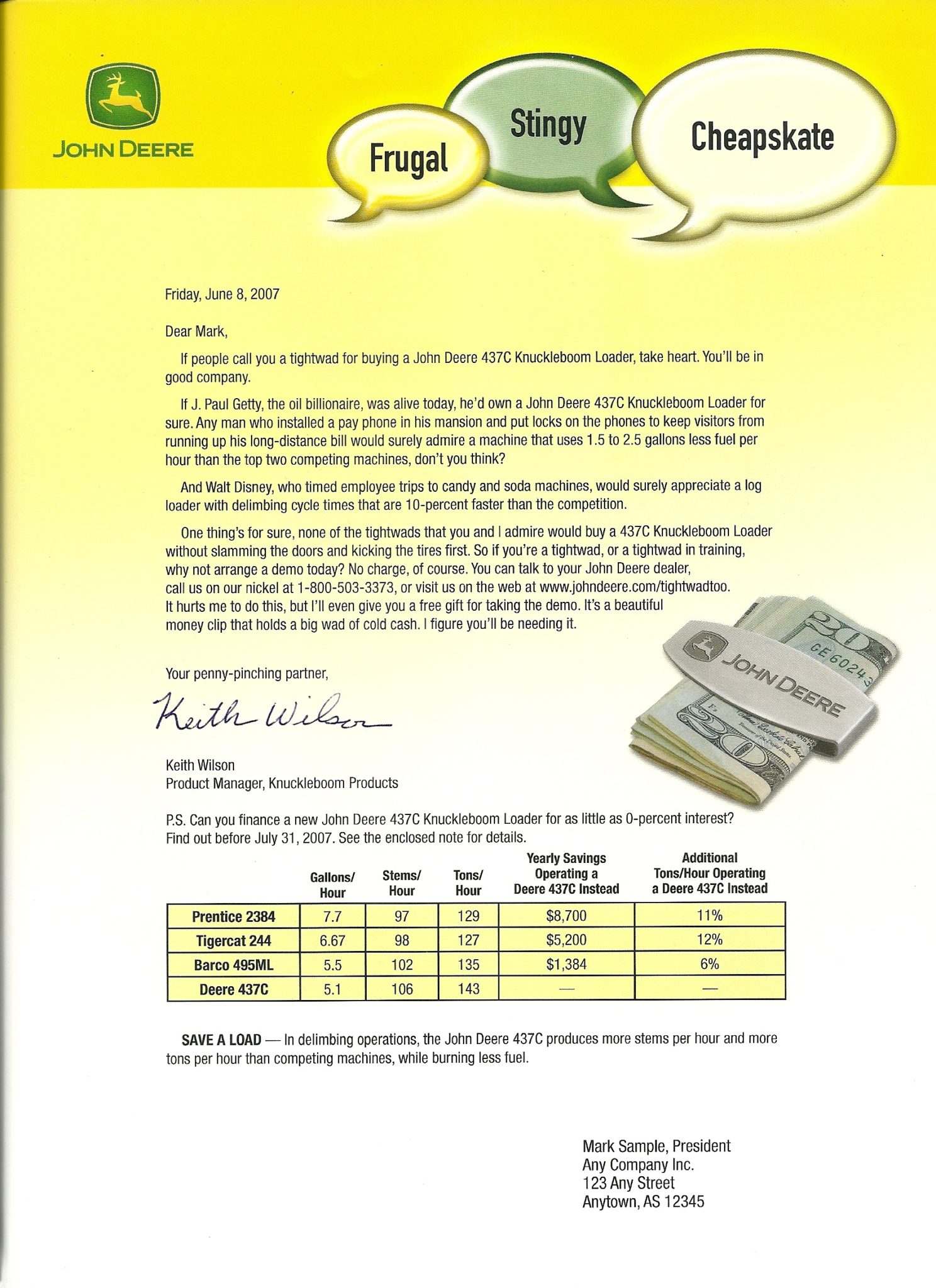
Brands I Have Written for Since 1989
(Typically as the senior white-label writer for their agency of record.)







Your Investment
Pricing & Packages
Mini Package
from 1200€
Perfect for a simple one-page website or a landing page. Included are:
- Luctus porttitor primis turpis dignissim.
- Praesent ad aliquet eu sit ornare.
- Sem lorem urna ante lobortis interdum.
Complete Package
from €2400
The most frequently selected offer. Perfect for a mid-sized business. Included everything from the Mini Package and:
- Feugiat litora urna nisi finibus curae.
- Praesent ad aliquet eu sit ornare.
- Sem lorem urna ante lobortis interdumLuctus porttitor primis turpis dignissim.
VIP Package
from 3600€
Perfect for clients who wish to delegate their entire online presence to a skilled professional.
- Feugiat litora urna nisi finibus curae.
- Luctus porttitor primis turpis dignissim.
- Sem lorem urna ante lobortis interdum.
- Faucibus placerat sagittis vitae eleifend si tempor elementum.
Tips & Tricks
From the Blog
Invite potential clients to check out your blog. Tell them what useful knowledge they can learn from your content to encourage them to read and keep coming back.

10 blunders copywriters make with ChatGPT
- July 14, 2025
- Comments (0)
One common blunder that new copywriters make is using AI to write their copy. When integrating AI tools like ChatGPT into advertising copywriting, you must be aware of their inherent […]

4 Ways You Can Grow Your Creativity
- April 27, 2024
- Comments (0)
Creativity is a powerful force that fuels innovation, problem-solving, and personal growth. Whether you're an artist, entrepreneur, or simply someone looking to enhance your creative thinking, there are practical steps […]
F.A.Q.
Popular Questions
Technical depth and domain fit
What industries and technologies have you written about?
For more than three decades I have written for industrial, manufacturing, automation, and energy companies. Through their agencies of record, I've written for ABB, John Deere, Rockwell Automation, Bell, Siemens, Psion Teklogix, Hitachi Energy, and 3M. Recent topics include water utility cybersecurity and condition monitoring, energy management and MOM software for life sciences, ISA-95 and the Purdue model, OPC UA, unified namespace, MQTT, statistical process control, electronic batch records, eQMS, and smart sensors. I've also written for automation integrators, elevator component makers, aerospace nameplate manufacturers, and electric utilities.
How do you get up to speed on a technology you haven't covered before?
I read the source material first: spec sheets, application notes, standards, and the client's existing content. Then I interview the engineer who knows it best. With three decades of industrial vocabulary behind me, I'm usually learning one new product or application, not a whole new field. That makes the ramp short.
Can you write for engineers as well as executives and procurement?
Yes, and most of my projects need both. Engineers want specifics and no hype. Executives want the business case: cost, risk, and uptime. Procurement wants proof and clear comparisons. I decide which reader a piece is for before I outline it, and I write to that reader.
What is your experience with long sales cycles and buying committees?
Nearly everything I write supports a long, multi-stakeholder sale. I have written web copy, thought leadership, and LinkedIn articles based on agency research into the manufacturing buying journey. I have also written brochures, sales presentations, buying guides, and a sales playbook. Each piece is built for a particular stage and a particular member of the buying committee.
What is your experience writing for industrial, manufacturing & B2B tech?
I am a veteran B2B copywriter specializing in industrial manufacturing, robotics, and automation. I regularly write for sectors like process manufacturing, specialty vehicles, and industrial equipment, so I am completely comfortable with technical terminology and long, complex sales cycles.
Are there any industries or types of projects you do not work on?
Yes, to ensure my work aligns with my personal standards and areas of highest impact, I do not take on projects in the defense and military sectors, nor do I write for anything involving gambling, sports betting, or lotteries. Outside of those exclusions, I am open to the full spectrum of industrial manufacturing, automation, and commercial B2B technology.
Process and SME access
How do you run SME interviews?
Every piece I write starts with an SME interview. It's the core of how I work, and I call the method The Engineering Authority Interview. Before the call, I lock the topic and draft a working title. I also prepare questions from the source material. During the call, I share a live document on screen so the SME can watch the outline take shape and correct me as we go. I press for specifics: numbers, failure modes, trade-offs, and the reasons behind design choices. Those details are what make content competitors and AI can't copy. Most interviews take 30 to 60 minutes on Zoom or Teams.
Can you work independently or do you need a detailed brief?
I am very self-sufficient. Whether you hand me a comprehensive creative brief or just a single-sentence topic and an SME's contact info, I can take the ball and run with it without requiring hand-holding from your account managers.
Can you work from thin briefs?
Yes. Most of my assignments arrive with a short brief and an SME's name, and many are done by noon. The interview fills the gaps. If a brief is thin on audience or goal, I ask two or three questions up front rather than guessing.
How do you start a new assignment?
I start by clarifying the target buyer persona, their pain points, and where the asset sits in the sales funnel. From there, I review existing product literature, outline the commercial angle, and prepare targeted questions if an SME interview is part of the scope.
What do you do if you realize a requested topic or angle won't work?
I flag it early and come to you with a solution. If research or an SME interview reveals that the original angle misses the mark for the buyer, I will message the account manager right away with a recommended pivot before burning time on the wrong draft.
How do you approach writing about topics where you aren't an expert?
I rely on structured SME interviews and deep technical research. I know how to read spec sheets, ask engineers the right questions to uncover commercial value, and translate complex mechanical or automation features into clear business outcomes for plant managers and buyers.
Revisions
How do you handle client feedback?
I take a low-ego, collaborative approach. Technical clients often have very specific preferences around terminology or compliance, so I view redlines as a normal part of getting the technical nuances right and turn revisions around quickly.
How do you handle fact-checking, source verification, and editing?
Before I submit a draft, every technical claim is cross-checked against client documentation, SME transcripts, or primary industry sources. I also self-edit rigorously for clarity, tone, and adherence to your client's style guide so your team receives near-publishable copy.
How many revision rounds are included?
My fee includes unlimited revisions.
How do you handle conflicting feedback?
When reviewers disagree, I don't try to merge everything. I send the conflict back to the account lead with a recommendation, so one person makes the call. I've also synthesized feedback from many stakeholders into a single web page for an agency client, so I'm used to finding the common thread.
How many rounds of revisions are included in your fee?
My fee includes unlimited revisions. I revise until you and your client are satisfied. I nail most deliverables on the first or second draft.
White-label and agency relationship
Are you comfortable working white-label?
Completely. White-label work for agencies is most of my business. I don't need a byline, and I never name the agencies I write for.
Will you talk with end clients directly, and under whose name?
Yes, as part of your team. Agencies usually give me a branded email address, and I join Zoom and Teams calls as one of their people. The end client sees one team, which is yours.
Will you agree not to solicit our clients, and sign an NDA or MSA?
Yes to all three. Your clients are your clients. I'm happy to sign your non-solicitation agreement, NDA, and MSA.
Do you work for competing agencies or manufacturers?
I write for more than one agency, and I keep each agency's work and information separate. If an assignment would put me on two directly competing brands at once, I tell you before I accept it, and you decide.
Can samples you wrote through us appear in your portfolio?
Only with your permission. In public I may name an end brand as work done "through their agencies of record," but I never name the agency. If you'd rather I not mention the brand either, I won't.
Capacity and reliability
What is your current availability?
I have room for a new agency relationship as a dedicated senior writer on industrial accounts.
What is your typical turnaround?
Once the SME interview is done, I typically submit the outline the next day and the first draft within a day or two of the outline being approved.
Can you handle rush jobs?
Yes, when an SME is available on short notice, I can typically jig my schedule on hop on a call at short notice. I also handle rush jobs for my long-term agencies.
What are your weekly turnaround times and capacity?
Because I run a dedicated solo practice, my schedule is predictable and reliable. Standard long-form assets typically take five to seven business days depending on SME scheduling, and I keep buffer capacity open for recurring agency clients.
What does your contract, rate structure, and revision policy look like?
I keep things straightforward and agency-friendly. I work on transparent project-based flat fees that include two rounds of consolidated revisions, and I am happy to work under your agency's standard contractor agreement and NDA.
Artificial intelligence
What is your stance and workflow regarding generative AI?
I use AI for initial background research, transcribing, outlining, and mining interview transcripts for gold. I may use AI to create a rough draft. I use extensive safeguards to ensure that every piece has authenticity, technical accuracy, zero fluff, and zero AI hallucinations.
How do you ensure that your writing is original and not AI slop?
My value comes from the SME interview. That's where the details come from that no AI model has, because those details in your client's engineer's head, not on the internet. If I use AI at all, it's for routine tasks . I check every claim against the interview and the source material. I'll follow any AI policy you or your client have.
SEO, GEO, AEO
How do you optimize for SEO and organic search?
I focus on search intent and natural integration. Rather than stuffing keywords, I weave target technical terms into headers and body copy organically while structuring the piece so it answers the exact questions engineers and procurement teams are searching for.
How do you optimize content for AI search (GEO / AEO)?
Beyond traditional SEO, I structure content for Generative Engine Optimization (GEO) and Answer Engine Optimization (AEO). I write clear, direct, factual summaries under descriptive subheadings, use structured comparisons, and incorporate verifiable technical data and SME insights so AI search engines like ChatGPT, Perplexity, and Google AI Overviews can easily extract and cite the client as an authoritative source.
Samples and proof
Can you show me samples or case studies specific to this industry?
Yes, I have a portfolio of industrial white papers, case studies, and sales enablement assets. I can send over examples tailored to the exact sub-verticals your agency serves, such as automation integrators or OEM equipment manufacturers.
Do you have results tied to your work?
In agency work, results usually go to the agency and the end client, not to the writer. What I can point to is relationships. My primary agency client has kept me on its top industrial accounts for almost a decade, and I'm still writing for those brands today.